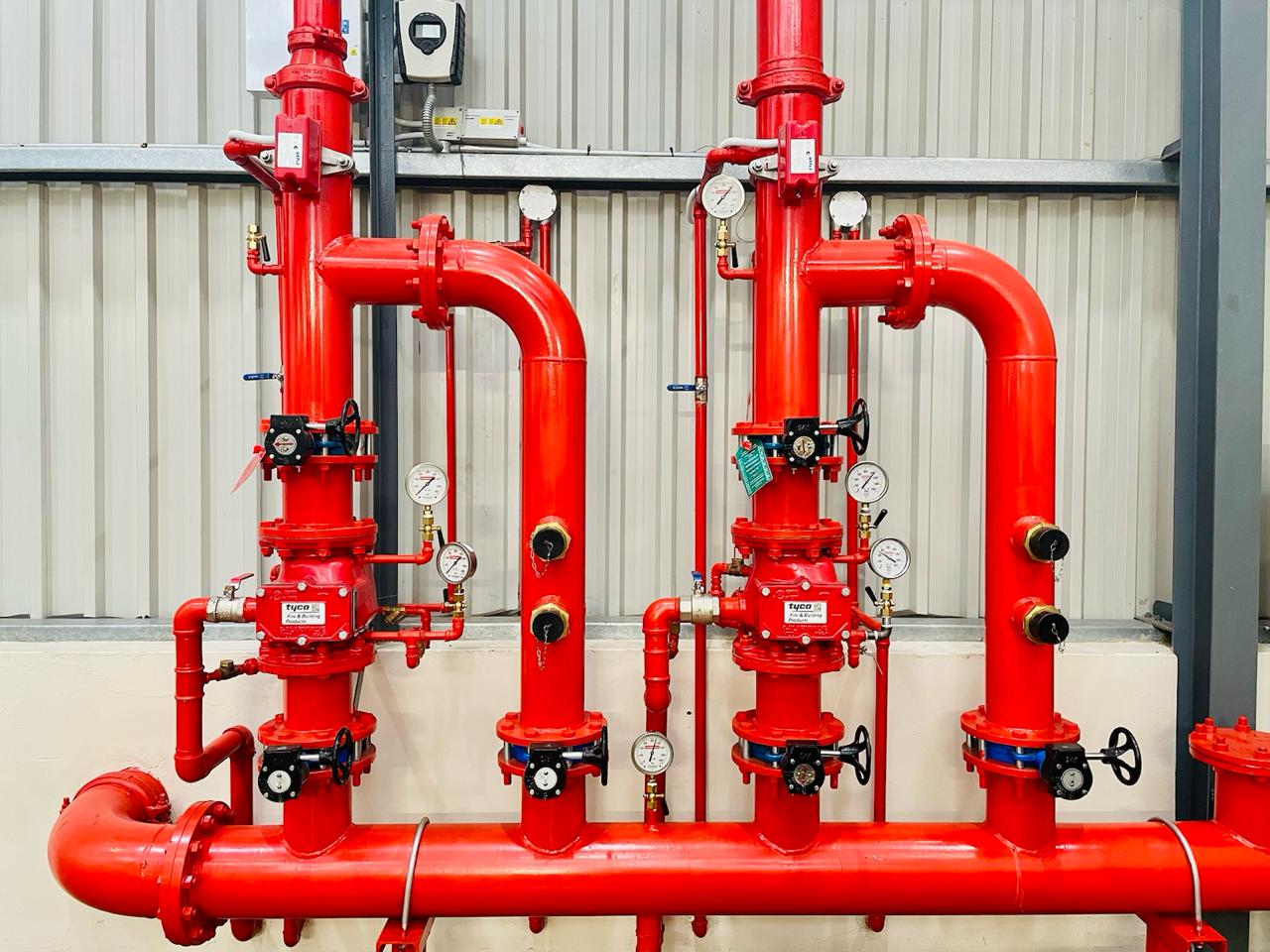
A practical guide to ECSA FPSP oversight, competent fire-system contractors, applicable SANS standards and the records South African building owners should request.
Fire protection compliance in South Africa is not determined by one certificate, company listing or service label. The correct appointment depends on the system, the approved fire design, the applicable legislation and standards, and the competence required for each stage of the work. Building owners should therefore assess professional registration, discipline-specific competence, technical resources and project evidence together.
1. Start with the approved fire-safety basis
The National Building Regulations and Building Standards Act, the applicable requirements of SANS 10400-T, approved building plans, performance-based rational fire designs, municipal conditions and occupational health and safety duties form part of the wider compliance environment. A project may also be subject to insurer requirements, an approved design standard, manufacturer instructions and contractual conditions. The current edition formally adopted for the project should always be confirmed rather than assumed.
2. Understand the role of an ECSA-registered FPSP
The Engineering Council of South Africa registers Fire Protection Systems Practitioners in a specified professional category. An FPSP's authority is endorsement-specific: registration does not create unlimited competence across every fire discipline. Clients should confirm the practitioner's current ECSA status, registration number, endorsed systems and the functions for which the practitioner is competent, such as design, installation, commissioning, maintenance or inspection.
Fire Brand Group's technical oversight is led by Clyde Becker, Technical Director and ECSA-registered Fire Protection Systems Practitioner, registration 2024140017. His registered scope covers water-based fire protection, fire detection and gaseous fire suppression. This published registration gives clients and authorities a clear professional reference point for the relevant work.
3. Match competence to the fire-protection discipline
A competent sprinkler designer is not automatically a competent fire-detection designer, gaseous-suppression commissioner, electrician or portable-extinguisher technician. Fire sprinkler systems, fire pumps and tanks, hydrants, detection and alarm systems, gaseous suppression, smoke control, passive protection, portable equipment and electrical interfaces each require appropriate knowledge, experience and, where applicable, registration.
Fire Brand Group's professional team includes NFPA-certified water-based specialists, SAQCC Fire Designers, Fire Sprinkler Designers, SAQCC Fire Commissioners & Installers, and a Department of Employment and Labour registered Installation Electrician. This multidisciplinary structure supports coordinated design, installation, commissioning, inspection and maintenance across integrated fire and life-safety systems.
4. Apply the correct technical standards
The approved design basis determines which standards apply. Typical South African references include SANS 10287 for automatic sprinkler installations, SANS 10139 for fire detection and alarm systems, SANS 14520 for gaseous fire-extinguishing systems, SANS 10400-T for fire protection in buildings, SANS 10142-1 for electrical installations, SANS 1475 for relevant portable fire-equipment servicing, SANS 1253 for fire-door assemblies and SANS 10177 series for fire testing.
International standards may also apply when expressly adopted by the design, client, insurer or authority. Examples include NFPA 13 for sprinkler-system design and installation, NFPA 20 for stationary fire pumps, NFPA 22 for water tanks, NFPA 25 for inspection, testing and maintenance of water-based systems, NFPA 72 for fire alarm and signalling, and NFPA 2001 for clean-agent fire-extinguishing systems. Standards should be applied as a coordinated design basis, not selected informally after installation.
5. Distinguish statutory registration from private scheme requirements
A private Local Rulebook, inspection scheme or insurer requirement can be important and may be binding on a particular project. It is not, however, the same as legislation or ECSA professional registration. Clients should establish whether a scheme requirement arises from the approved design, policy wording, insurer instruction, contract or authority condition. The project team can then plan the required submissions, inspections and close-out evidence from the start.
6. Installation quality must follow the approved design
Competent installation requires more than fitting compliant products. Pipework, supports, valves, pumps, tanks, detection devices, panels, cabling, interfaces, fire stopping and suppression equipment must be installed in accordance with approved drawings, calculations, equipment listings and manufacturer instructions. Uncontrolled substitutions or site changes can affect hydraulic performance, detection coverage, system logic, fire ratings and life safety.
7. Commissioning proves integrated operation
Commissioning should verify that the installed system performs as intended. Depending on the scope, this can include flow and pressure testing, pump tests, alarm and supervisory signals, detection zoning, cause-and-effect sequences, battery and power checks, gaseous-system release logic, enclosure integrity, smoke-control interfaces and access-control responses. Integrated testing is essential because individual components may work while the combined life-safety sequence still fails.
8. Maintenance must preserve the approved level of protection
Inspection, testing and maintenance are ongoing responsibilities. NFPA 25 may form part of the maintenance basis for water-based systems when adopted for the site, alongside SANS 10287, manufacturer requirements and the approved design. Maintenance tags are useful records, but a tag alone is not proof that an entire system complies. Detailed reports should record the work performed, readings, defects, impairments, corrective actions and restoration status.
9. Evidence building owners should request
Before appointing a provider, request the relevant professional and technical registrations, the defined scope of responsibility, evidence of discipline-specific competence, insurance where required, and confirmation of the applicable design basis. At completion, retain approved and as-built drawings, calculations where applicable, equipment schedules, commissioning results, cause-and-effect records, certificates or declarations required for the scope, operating information, training records and maintenance reports.
10. A practical appointment checklist
Ask five questions: Who accepts professional responsibility? What systems and functions fall within that person's registered competence? Which standards and project conditions apply? Who will install, test and commission each discipline? What documented evidence will be delivered at handover and during maintenance? Clear answers reduce compliance gaps, duplicated work and disputes at the end of a project.
Fire Brand Group provides integrated fire-protection services across South Africa through its Johannesburg and Cape Town operations. The group delivers turnkey projects, comprehensive maintenance, fire detection, gaseous suppression, water-based fire protection, smoke control and electrical services, risk management and evacuation planning. Its combined project portfolio exceeds R150 million since 2023.
For project-specific advice, verification of professional scope or a fire-protection quotation, contact Fire Brand Group at info@firebrandsa.co.za or visit https://www.firebrandsa.co.za/contact.
NB This article provides general information and does not replace project-specific professional advice, approved designs or authority requirements.