## What a Fire Protection System Is Actually For
Ask most property owners why they have a fire protection system, and the answer usually comes down to one word: compliance. It ticks a box on an insurance form. It satisfies a building regulation. It keeps an inspector happy.
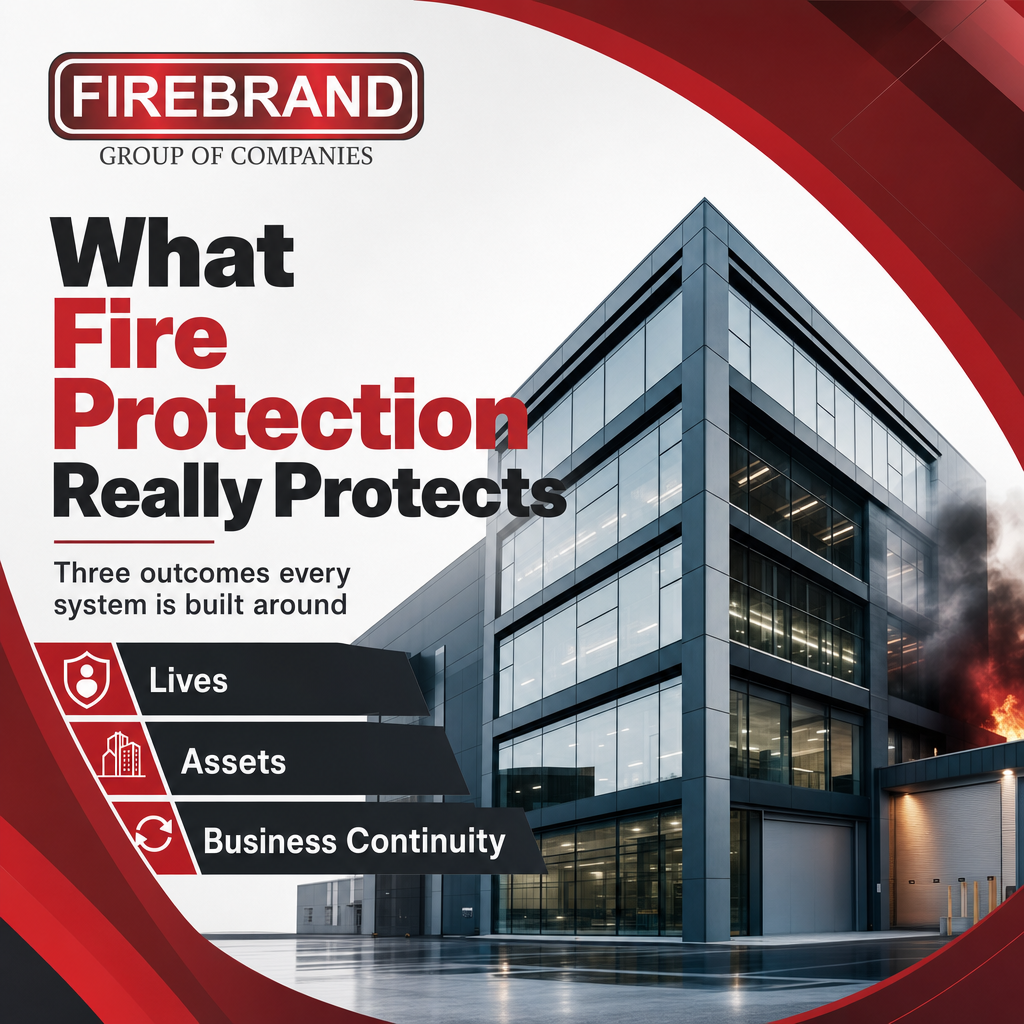
That thinking undersells what these systems are built to do. A well-designed fire protection system exists to safeguard three things that matter far more than a signed-off certificate: the people who work in your building, the assets you have spent years accumulating, and the ability of your business to keep running when something goes wrong.
At Fire Brand Group, every system we design and install is measured against those three outcomes. Not the paperwork. The results. Here is what that means in practice, and why it should shape how you think about fire safety on your commercial or industrial site.
## Outcome One: Protecting Lives
Everything else is secondary to this. A fire on a commercial or industrial site can escalate in minutes, and the difference between a controlled evacuation and a tragedy often comes down to how well the detection and suppression systems were designed for that specific environment.
Generic solutions do not cut it here. A warehouse with high ceilings and stored goods behaves completely differently to an office floor or a plant room housing electrical equipment. Detection needs to account for how smoke and heat actually move through the space. Alarms need to reach every person, including those in noisy production areas. Escape routes need to stay clear and clearly marked.
The systems that protect people best are the ones designed by professionals who understand the building, the occupancy patterns, and the particular hazards present. That is the standard we work to. When we walk a site, we are thinking about how people get out safely long before we think about anything else.
## Outcome Two: Protecting Assets
For most industrial and commercial operations, the physical assets on site represent enormous value. Machinery, stock, servers, vehicles, specialised equipment that may take months to replace. A fire does not just destroy what it burns. Smoke damage, water damage from suppression, and heat can render entire areas unusable well beyond the point where flames reached.
The goal of a properly engineered system is early intervention. Catch the fire while it is small, contain it to one zone, and limit the damage to the smallest possible footprint. That requires matching the right suppression method to what you are actually protecting. A water-based system that works well in a general storage area could be the wrong choice for a server room or an area with sensitive electronics.
This is also where emerging risks come into play. Solar installations and battery energy storage are now common on commercial sites, and they introduce fire behaviour that traditional systems were never designed to handle. Lithium-ion battery fires in particular are a different animal, burning hotter, reigniting after they appear to be out, and resisting conventional suppression. If your site has added these technologies, your fire protection strategy needs to have kept pace.
## Outcome Three: Protecting Business Continuity
This is the outcome people underestimate most. Even if everyone gets out safely and the fire is contained, a serious incident can still put a business on its knees. If your operation cannot function for weeks or months while you rebuild, repair, and re-source, the financial impact can dwarf the cost of the fire itself.
Many businesses that suffer a major fire never fully recover. Contracts get lost. Customers move on. Cash flow dries up during the downtime. Business continuity is about designing protection that keeps disruption to a minimum so you can be back up and running quickly.
That means thinking beyond the fire event itself. How is the system zoned so that an incident in one part of the site does not shut down the whole operation? How quickly can affected areas be brought back online? Are the systems maintained so they perform when needed rather than failing at the worst possible moment? These questions belong in the design conversation from the start, not after something has already happened.
## Built for Commercial and Industrial Realities
Fire Brand Group works specifically with commercial and industrial property across Southern Africa. That focus matters. The pressures on a manufacturing plant, a distribution centre, a retail complex, or a logistics operation are not the same as those on a residential building, and the solutions cannot be either.
We have been doing this since 2014, building the business around a simple idea: raise the standard of what fire engineering looks like in this sector. That shows up in the way we approach every project, from the initial site assessment through to design, installation, and ongoing maintenance.
The technical side of this work is not something you want to leave to chance. Fire protection is a discipline that combines engineering, regulatory knowledge, and hands-on experience with the specific systems involved. Our teams are certified professionals, and that is deliberate. When your building's protection depends on a system performing correctly under real conditions, the qualifications and experience of the people who designed and installed it are not a detail. They are the whole point.
## What This Means for You
If you own or manage a commercial or industrial property, it is worth stepping back and asking whether your current fire protection genuinely serves all three outcomes, or whether it just satisfies the minimum.
A few questions to sit with:
- If a fire broke out during your busiest shift, are you confident every person on site could get out safely? - Would your most valuable assets survive, or would smoke and water damage extend the loss far beyond the fire itself? - Could your business keep operating, or would a serious incident force you to shut down for weeks? - Has your protection kept up with newer risks on site, like solar arrays or battery storage? - Were your systems designed and installed by certified professionals who understood your specific environment?
If any of those answers give you pause, that is a signal worth acting on. Fire protection is one of those areas where the cost of getting it right is always smaller than the cost of finding out too late that you got it wrong.
## The Takeaway
A fire protection system is not a box to tick. It is a commitment to three things: the safety of your people, the preservation of your assets, and the survival of your business. When those outcomes drive the design rather than the bare minimum required by regulation, you end up with protection that actually protects.
That is the standard Fire Brand Group was built on, and it is what we bring to every commercial and industrial site we work with across Southern Africa.
Want to know whether your current setup is truly built around protecting lives, assets, and continuity? Get in touch today. Email us at info@firebrandsa.co.za.