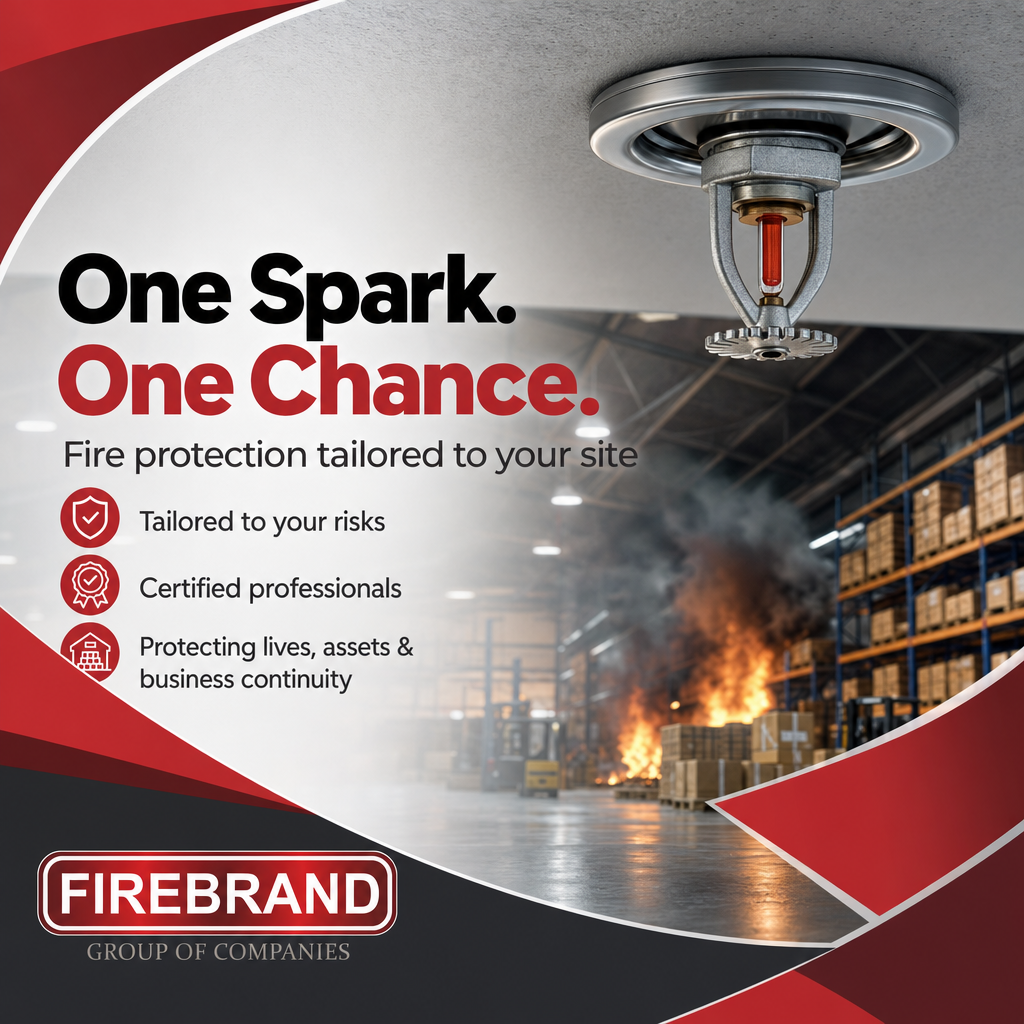
## When Standard Fire Protection Stops Being Enough
A warehouse packed with lithium batteries has different risks than a manufacturing plant, which has different risks again from a multi-storey office block or a cold storage facility. Yet plenty of sites are still protected by systems that were designed for a generic building, not the one they actually occupy.
That gap is where most fire risk hides. The extinguisher on the wall might be fine. The alarm might sound. But if the underlying design was never engineered around your specific hazards, your occupancy, and how your operation actually runs, you are protecting the building on paper more than in practice.
Fire engineering exists to close that gap. It is the difference between installing equipment and designing a system that holds up under real conditions. For industrial and commercial site operators, that distinction matters more than almost anything else on the compliance checklist.
## What Fire Engineering Actually Means for Complex Sites
Fire engineering is the applied discipline of designing fire protection around the specific behaviour of a building, its contents, and the people inside it. It is not a product you buy off a shelf. It is a technical process that starts with understanding the risk and works backwards to the right solution.
Complex sites raise questions that a standard approach cannot answer well:
- How does fire and smoke move through an open-plan warehouse with high racking? - What suppression method suits a space where water could make certain hazards worse? - How do you evacuate a facility running shifts around the clock, with staff spread across levels and zones? - What happens when the stored material itself, like lithium batteries or flammable stock, changes how a fire develops?
These are engineering problems, not procurement problems. Getting them right requires people who understand fire dynamics, building behaviour, and the regulatory framework that applies across Southern Africa. At Fire Brand Group, that work sits at the centre of what we do. We design solutions for the property in front of us, not a hypothetical one.
## Why Certified Professionals Change the Outcome
There is a real difference between a supplier who fits equipment and a certified professional who engineers a solution. The equipment might look identical on the invoice. The thinking behind it is not.
Certified fire engineering professionals bring three things that make a measurable difference on complex sites:
**They design for how your site actually operates.** A generic design assumes a generic building. A certified engineer studies your layout, your occupancy patterns, your stored materials, and your operational realities before recommending anything. That means the system fits the site instead of forcing the site to fit the system.
**They understand where compliance ends and genuine protection begins.** Meeting the regulation is the floor, not the ceiling. Technical experts know how to design systems that satisfy the code and perform when it counts, which are not always the same thing.
**They stand behind the work.** Certification is accountability. When a certified professional signs off on a design, that carries weight with insurers, with authorities, and with your own risk position. It tells everyone involved that the solution was engineered by someone qualified to make those calls.
For site operators, this is where peace of mind comes from. Not from having equipment on the wall, but from knowing the whole system was designed by people who understood the stakes.
## Engineering Solutions Around Real Industrial and Commercial Risk
Every sector we work with has its own fire signature. Recognising that is the starting point for any serious fire engineering brief.
**Warehousing and distribution** deal with high-density storage, long travel distances to exits, and stock value that can run into serious numbers. Detection speed and suppression coverage across large volumes matter enormously here.
**Manufacturing and industrial plants** often combine heat sources, machinery, and processes that introduce their own ignition risks. The fire strategy has to account for what the operation itself brings to the equation.
**Facilities handling lithium batteries and EV transit** face a hazard that behaves differently from a conventional fire. Thermal runaway does not respond to every suppression method the same way, and the design has to reflect that reality rather than treat it as an afterthought.
**Commercial and office environments** carry high occupancy, which pushes life safety and evacuation planning to the front of the design.
In each case, the engineered answer looks different. That is the point. A solution built around excellence is one that respects the specific risk profile of the site instead of applying a template. Combining technical expertise with a genuine focus on doing the work properly is what separates a system that merely exists from one that protects lives, assets, and business continuity.
If you want to understand how the equipment side of that fits together, our piece on fire equipment supply and maintenance for commercial and industrial sites is a useful companion read. [RELATED_ARTICLE]
## Turning Fire Engineering Into a Business Advantage
Site operators sometimes treat fire protection purely as a cost or a compliance obligation. Well-designed fire engineering is neither of those things alone. It is protection for everything you have built.
A fire that shuts down operations does not just damage stock. It interrupts supply, breaks customer commitments, and can put a business under pressure for months. An engineered fire strategy is one of the few investments that protects continuity itself, keeping people safe and keeping the doors open.
There are practical steps any operator can take to move in the right direction:
- Ask when your current fire strategy was last assessed against how your site operates today, not how it operated when the system went in. - Confirm whether your protection was engineered around your specific hazards or applied as a standard package. - Check that the professionals behind your design and maintenance are certified and qualified for the work. - Treat any change in what you store, how you operate, or how many people occupy the site as a reason to review the fire strategy.
Sites change. Operations grow, stock shifts, and new hazards arrive. A fire engineering approach that was right three years ago may not match what you run today. The value of working with certified professionals is that the strategy keeps pace with the risk.
## The Takeaway for Site Operators
Standard fire protection works for standard buildings. Complex industrial and commercial sites are rarely standard, which is exactly why they need solutions engineered around their real conditions.
The combination that matters is straightforward: innovative fire engineering, delivered by certified professionals, built with a focus on excellence rather than the minimum. That is how you protect lives, assets, and the continuity of the operation you have spent years building.
At Fire Brand Group, raising the standard across the fire engineering industry has been the goal since 2014. If your site carries risks that a generic approach cannot properly address, let our technical experts look at what you actually need.
Get in touch today. Reach us at info@firebrandsa.co.za.